


Golf Fan Comparison for Cooler Cart Rounds
A cart roof can provide shade, but it does not do much when the air feels like it is coming from a hair dryer. That is where a practical golf fan comparison matters. The right cooling setup can make a long, sunny round more comfortable without taking up cupholder space, requiring cart modifications, or adding another complicated task before tee time.
For most golfers, the choice comes down to three options: a standard portable fan, a misting fan, or a larger mounted cooling system. Each can help, but they solve heat differently. The best pick depends on where you play, how much gear you carry, and whether you need simple airflow or real evaporative relief.
Golf Fan Comparison: Airflow vs. Misting
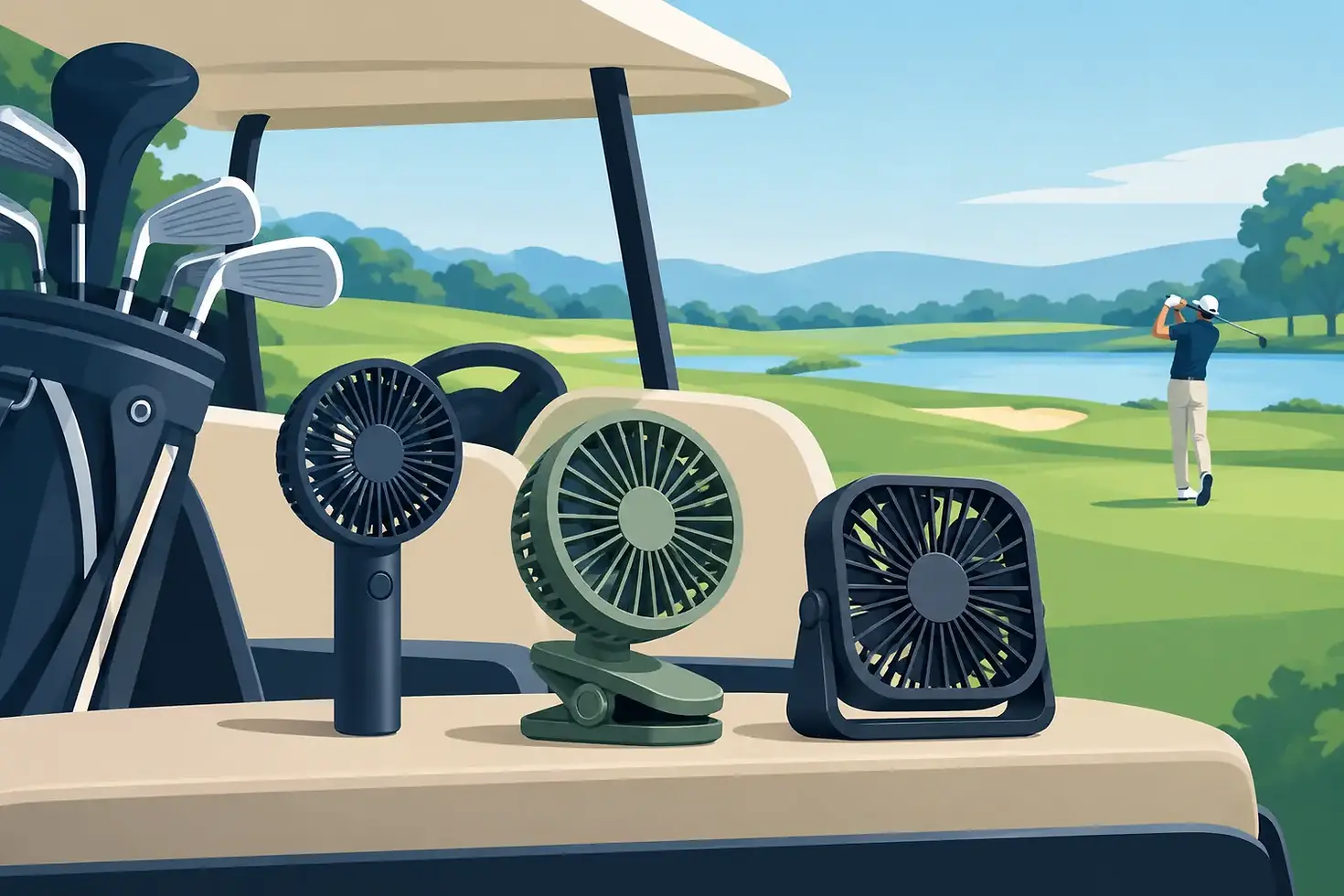
A standard portable fan moves air across your skin. On a dry or mildly hot day, that breeze can feel surprisingly effective, especially when you are riding between shots. These fans are often compact, rechargeable, and easy to place in a cupholder, clip to a cart, or hold in your hand.
The limitation is simple: a fan is moving the same hot air already around you. When the temperature climbs into the 90s, airflow alone may not be enough to keep you comfortable during a four-hour round. It helps with sweat evaporation, but it cannot add moisture to the cooling process.
A misting fan combines airflow with a fine water mist. As that mist evaporates, it draws heat away from your skin. In hot, dry conditions, the difference can be substantial. You get the benefit of moving air plus a cooling effect that a dry fan cannot provide.
Misting is not automatically the right answer for every player. In very humid weather, water does not evaporate as quickly, so the cooling effect is reduced. You may still prefer mist over dry airflow, but nozzle quality and mist control become more important. A fine mist feels refreshing. Large droplets can leave your shirt, seat, scorecard, or phone wet.
Compare the Mounting Before You Compare the Fan Speed
A powerful fan is not useful if it points at the floor, rattles loose, or needs a permanent bracket on your cart. Mounting is one of the biggest differences between general outdoor fans and equipment designed for golf carts.
Clip-on fans are common and inexpensive, but their performance depends on finding a solid place to clip them. Some clips struggle with rounded cart frames, thick roof supports, or movement over rough paths. They can also block a useful storage area or require repositioning each time you get in and out of the cart.
Cupholder fans are convenient for personal cooling and can work well for a solo rider. Their main drawback is direction. Airflow begins low in the cart and may be partially blocked by a water bottle, golf bag, or your legs. They are best for a compact personal breeze rather than cooling both riders.
Magnetic mounting is a strong option for golfers who want fast setup and removal. A magnetic fan can attach to a suitable metal surface in seconds, then come off just as quickly when the round is over. There are no screws, straps, or permanent cart changes. This matters if you play different courses, use rental carts, or do not want accessories left on a private cart between rounds.
For any mounted option, look for an adjustable head or nozzle. Being able to aim cooling at your face, chest, or legs makes a bigger difference than a small jump in advertised fan power. A fixed fan position is rarely ideal for both the driver and passenger.
Water Storage Changes the Misting Experience
Misting systems need a water supply, and this is where portability can either improve or disappear. Some systems use a rigid reservoir. That may provide capacity, but it also adds bulk and makes the unit harder to pack into a golf bag or store in the trunk.
A collapsible water bag is usually more practical for golfers. Fill it before the round, attach it to the system, and pack it flat after use. It gives you water for misting without committing valuable cart storage space to a large hard-sided tank.
Capacity should match how you play. A golfer who walks nine holes or plays early morning may need only occasional misting. A pair playing 18 holes in direct afternoon sun will use more water, especially if the fan has dual nozzles. More capacity means fewer refills, but it also means more weight. The right balance is enough water for your typical round without turning a portable setup into another piece of bulky equipment.
Nozzle design also deserves attention. Fine, adjustable nozzles help direct mist where it is useful and avoid wasting water into open air. Anti-clogging design is equally practical. Golf courses are dusty places, and water bags are not always filled under perfect conditions. A system that is easy to clean and less prone to blockage will be more reliable when temperatures are highest.
Power: USB Is Convenient, but Plan for 18 Holes
Battery and power options are easy to overlook until the fan slows down on the back nine. Rechargeable fans are convenient because they can be charged at home, in your vehicle, or with a portable power bank. USB-powered systems are especially useful for golfers because replacement cables and backup power sources are simple to carry.
When comparing models, think beyond the largest battery number. Fan speed, mist use, number of nozzles, and the age of the battery all affect runtime. High fan speed and continuous mist will use more power than low airflow with occasional misting.
A cart-mounted USB option offers flexibility. If your cart has a USB outlet, you can run the fan while you play. If it does not, a charged power bank can keep the setup independent from the cart itself. That is a better fit for golfers who use different carts each weekend or switch between a personal cart and course rentals.
What Type of Golf Fan Fits Your Round?
The comparison becomes clearer when you start with your normal conditions rather than the fan's marketing claims.
| Fan Type | Best For | Main Trade-Off | | --- | --- | --- | | Handheld or cupholder fan | Personal airflow, quick use, short rounds | Limited reach and lower cooling impact in extreme heat | | Clip-on portable fan | Flexible placement on compatible cart surfaces | Clip stability and positioning can vary | | Misting fan | Hot, sunny rounds where dry airflow is not enough | Requires water management and occasional cleaning | | Mounted misting system | Frequent play in sustained heat and cooling for riders | Needs the right mounting location and a water supply |
If you play once in a while and only need a little movement on warm mornings, a compact rechargeable fan may be enough. It is light, simple, and useful away from the cart too.
If summer golf is part of your weekly routine, a purpose-built misting system is often the better fit. It provides more than a breeze, directs cooling where you need it, and avoids the hassle of permanent installation. MisterHub designs its golf cart cooling systems around that use case, with portable water storage, magnetic mounting, and quick setup for golfers who want relief without modifying their cart.
Do Not Let Added Features Create Added Hassle
The best golf cart fan is not always the one with the longest feature list. Extra lights, oversized housings, complicated brackets, or multiple loose parts may sound useful, but they can make a cooling accessory harder to use. If it stays in your garage because setup is annoying, it is not solving the problem.
Prioritize the features that affect every round: dependable airflow, mist that stays fine, stable mounting, easy aiming, accessible charging, and storage that does not compete with your clubs. Also consider how quickly you can install and remove the unit. A setup that takes less than a minute is far more likely to make it into your regular golf routine.
Before your next hot-weather tee time, think about the part of the round when heat bothers you most. If it is the ride between shots, steady airflow may be enough. If it is standing over a putt on a windless afternoon, targeted misting can make the better difference. Choose the fan that fits that moment, then keep it charged and filled before you leave for the course.


Comments