


Golf Cooling Examples That Work on Hot Rounds
A cart can feel like the hottest place on the course when the sun is high, the air is still, and the next tee box is a long ride away. The best golf cooling examples are not complicated. They reduce sun exposure, replace fluids, move air, or add a fine mist that helps your body cool itself while you keep playing.
For most golfers, one solution is not enough on a 90-degree day. A cold drink helps, but it does not create airflow. A fan helps, but it may feel limited when humidity is low and the cart has been sitting in direct sun. The practical answer is to combine a few simple cooling methods that fit the way you actually play.
Golf cooling examples for cart golfers
1. Start with water and electrolytes
Hydration is the cooling method that happens before you feel overheated. Bring more water than you expect to need, especially for a long round, a scramble, or a course with little shade between holes. Sip consistently instead of waiting until the turn to finish a full bottle.
For heavy sweating or rounds that stretch into the hottest part of the afternoon, an electrolyte drink can be useful alongside water. The goal is not to replace every drink with a sugary sports beverage. It is to replace fluids and salts lost through sweat so fatigue, headache, and cramps are less likely to catch up with you late in the round.
A small cooler in the cart makes this easy. Keep water cold, add a frozen bottle or two if possible, and use the melted ice water later in the day. It is a basic setup, but it supports every other cooling choice you make.
2. Create shade where you can
Cart roofs provide some protection, but they do not block the sun coming in from the side or reflecting off the path. A wide-brim hat, sunglasses, and lightweight sun-protective clothing reduce direct heat on your head, face, neck, and arms. That matters over four or five hours outside.
Use the cart roof deliberately as well. Park under trees whenever the pace of play allows, even if it is only while waiting on a tee box. Turn the cart so the driver and passenger seats stay shaded when possible. These small choices do not lower the air temperature, but they reduce how much radiant heat your body absorbs.
Shade is especially valuable for golfers who walk between shots or spend time outside the cart looking for balls. It works in every climate, requires no power, and pairs well with any fan or misting system.
3. Use a cooling towel for quick, direct relief
A wet cooling towel around the neck is one of the simplest tools in hot-weather golf. It is lightweight, inexpensive, and easy to refresh with cold water from your cooler. Place it on the back of your neck, across your forehead during a wait, or over your shoulders between holes.
The trade-off is that towels warm up quickly in extreme heat. They also need to be rewetted regularly, and some golfers do not want a damp towel against their collar or shirt. Still, it is an effective backup option because it takes almost no space in a golf bag.
For a better result, use a towel with moving air. A fan blowing across a damp towel can make a parked cart feel more comfortable while you wait for the group ahead.
4. Add airflow with a portable fan
Air movement helps sweat evaporate, which is one of the body’s main ways of cooling down. A portable fan is a strong choice when you want simple relief without carrying water for a misting setup. It can be useful on the cart, at the driving range, on the patio after a round, or anywhere you are sitting in stagnant heat.
Placement makes a difference. A fan aimed at your chest or face may feel good for a moment, but a position that moves air across your upper body usually provides more consistent comfort. Look for adjustable direction so the airflow can be set for the driver, passenger, or both.
Battery life and mounting are the practical details to consider. A fan that requires a complicated bracket or permanent wiring can be more trouble than it is worth for golfers who use different carts. USB-powered, rechargeable options are easier to move between a personal cart, a rental cart, and other outdoor settings.
5. Combine airflow and mist for stronger cooling
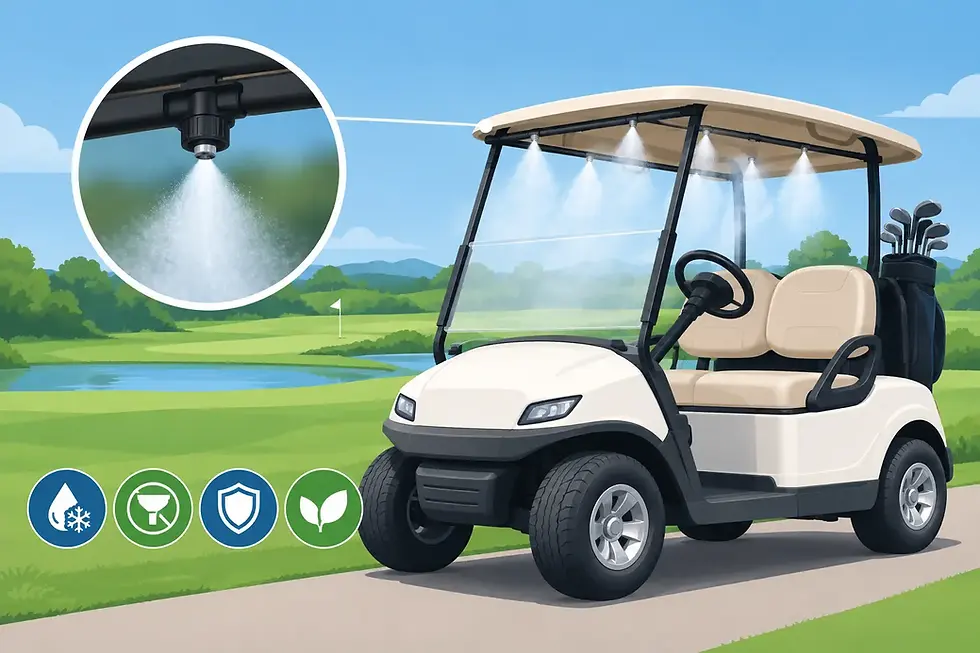
A misting fan is one of the most effective golf cooling examples because it combines two useful actions: moving air and adding a fine spray of water. As the mist evaporates, it can help cool the skin more quickly than airflow alone, particularly in hot, dry conditions.
This approach is not the same in every climate. In dry heat, evaporation happens quickly and the cooling effect can feel dramatic. In high humidity, water evaporates more slowly, so the mist may feel refreshing but less powerful. That does not make a misting fan a poor choice in humid areas. It simply means airflow, shade, hydration, and realistic expectations matter more.
For cart use, avoid bulky patio-style systems with long hoses, permanent mounts, or large water tanks. Golfers need equipment that can handle bumps, fit around clubs and passengers, and come off the cart at the end of the round. A portable unit with an adjustable nozzle lets you direct mist where it is needed rather than spraying the entire seating area.
MisterHub designs golf-cart cooling systems around that reality, using lightweight components, magnetic mounting, and collapsible water bags so setup does not become another pre-round task. A system that attaches and removes quickly is more likely to get used, especially by golfers who play different courses or rent carts regularly.
6. Keep the cart setup simple and balanced
The best cooling equipment is the equipment you will actually bring. Before your round, think about where a fan, water bag, cooler, phone, scorecard, and clubs will sit. Cooling gear should not block the windshield, interfere with steering, crowd the passenger, or create loose cords near the pedals.
A clean cart setup also makes cooling more effective. Mount a fan or misting nozzle high enough to reach the seated area, then adjust it before the first tee. Fill water bags or reservoirs with clean water, check battery charge, and keep any charging cable secured and out of the way. Those few minutes prevent the usual mid-round frustrations.
If you are sharing a cart, choose equipment with adjustable direction rather than assuming one fixed angle will work for both players. One golfer may be driving most of the round while the other is riding closer to the edge of the roof. The ability to reposition airflow or mist is more useful than maximum power pointed in only one direction.
What to choose based on your round
For a casual nine holes in moderate heat, cold water, a hat, and a small portable fan may be all you need. For an 18-hole round in direct sun, especially in the Southwest, Florida, Texas, or other high-heat areas, add a cooling towel and a misting option. The longer you expect to be exposed, the more valuable layered cooling becomes.
Private cart owners may prefer a dedicated setup they can keep ready in the garage. Frequent renters usually benefit from lightweight gear that mounts without tools and packs into a golf bag or trunk. If you play alone, a compact fan may cover your needs. If you often carry a passenger, look for a system that can cool both seats or be repositioned quickly.
Cost matters, too. Hydration and towels are low-cost essentials. A quality fan or misting system costs more, but it offers repeated comfort across rounds, range sessions, camping trips, and backyard use. The right choice depends on how often you play in heat and how much you value arriving at the 18th tee with some energy left.
Know when cooling gear is not enough
Cooling accessories can improve comfort, but they are not a substitute for responding to heat illness. Stop playing and move to shade or air conditioning if you feel dizzy, confused, nauseated, unusually weak, or develop a severe headache. Drink fluids, cool down, and seek medical attention when symptoms are severe or do not improve.
The smartest hot-weather setup is simple: reduce direct sun, drink regularly, and give yourself moving air when the cart turns into a heat box. Set it up before the first tee, then let your cooling gear do its job while you focus on the next shot.


Comments